Jeff Hassemer — the pragmatic take
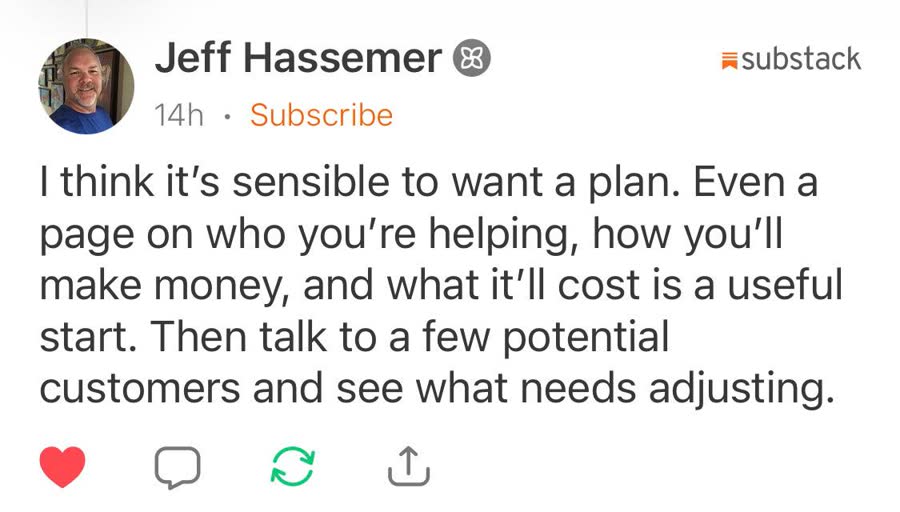
“I think it's sensible to want a plan. Even a page on who you're helping, how you'll make money, and what it'll cost is a useful start. Then talk to a few potential customers and see what needs adjusting.”
The questions business owners ask most, answered straight — no filler, no fine print. Whether you are thinking about starting, or growing a business that is already open, these are the conversations we have every week.
The first question
Short answer: yes — but “business plan” should not sound like a 40-page document you write once and file in a drawer. What you actually need is a short, living plan you can test with real customers and update as you learn.
One page is a legitimate start. Write down three things: who you are helping, how you will make money from them, and what your costs are. That page is enough to have your first honest conversations with potential customers and to see what needs adjusting. A plan you can hold in one hand beats a 40-page deck nobody rereads.
Two things, typically. First, you are harder to finance: banks and lenders will not extend credit to a business with no plan, because there is nothing to underwrite. Second, you end up running by feel — making pricing, marketing, and hiring decisions with no shared picture of where the business is going. With a plan you can build competitive advantage and a sharper value proposition; without one, you are essentially winging it.
Only as much as the decision in front of you requires. To launch, a one-page plan plus feedback from a few potential customers is a working start. To raise capital or get a business loan, you need the fuller version: your model, your financial model, your workflow and operations, and staffing — the things a lender or investor actually checks. Most businesses never need to write the full version; they need the one-page version now and know what to build when the stakes get bigger.
Yes — and it usually gets easier once the business is running. A live plan for an existing business is the same three questions answered with real numbers: who are your best customers, how does revenue actually flow, and what is costing you? For a growing business that also cares about being found, the plan is where your marketing strategy comes from: you cannot decide what to rank for, what to say, or how to convert until you can state clearly who you are helping and what it is worth.
You can draft the first page yourself in an afternoon — it should be your own answers, not someone else's template. What is worth paying for is the second step: a working session where a consultant or advisor pressures the plan against your real market, your numbers, and your next 90 days. That is exactly what a fit review with michelseo is built to do.
From the community
This question comes up constantly, so here is a live thread worth reading: “Am I crazy to think that I need a business plan to succeed as a startup?” Two responses from the thread, captured here so you can see the range of honest answers before you keep reading the discussion yourself.
“I think it's sensible to want a plan. Even a page on who you're helping, how you'll make money, and what it'll cost is a useful start. Then talk to a few potential customers and see what needs adjusting.”
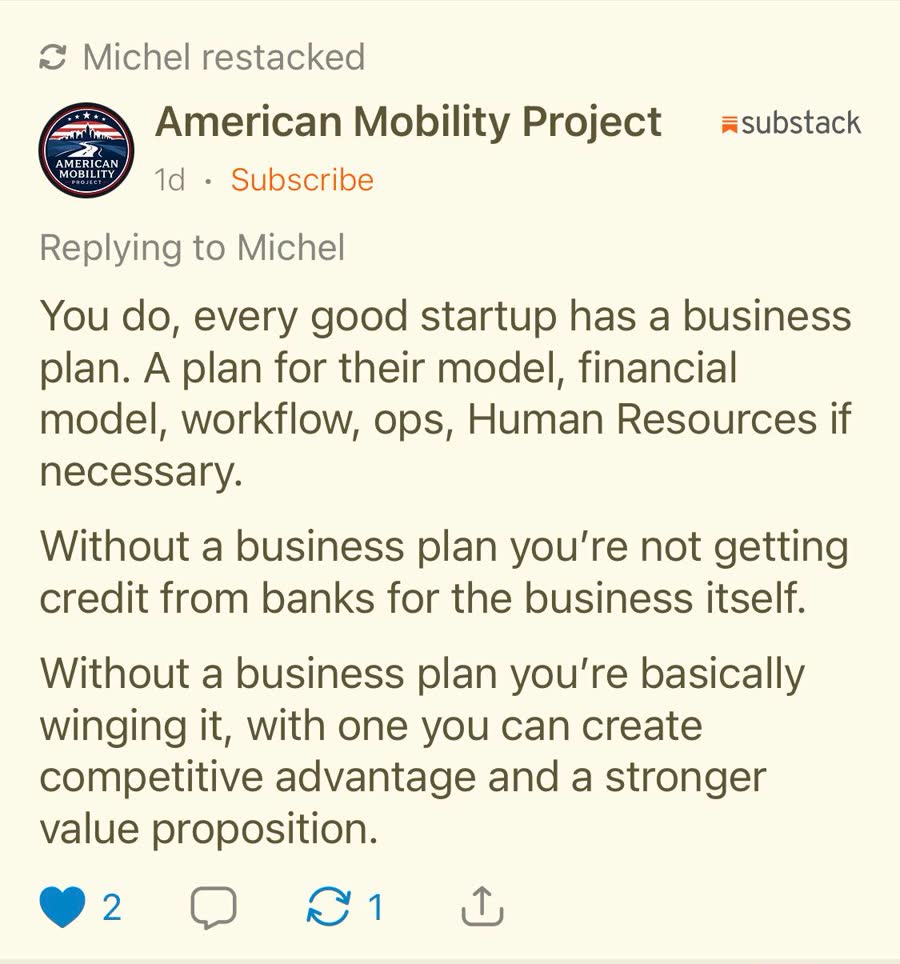
“You do, every good startup has a business plan. A plan for their model, financial model, workflow, ops, Human Resources if necessary. Without a business plan you're not getting credit from banks for the business itself. Without a business plan you're basically winging it, with one you can create competitive advantage and a stronger value proposition.”
Both answers are right — and they describe the same plan at two different stages. Open the full note and see what everyone else is saying →
More coming here
The business-plan question was the first. The next topics are the ones business owners actually ask in consultations — pricing, hiring, choosing a niche, and how a small business gets found. If you have a question you want answered here, send it over and it will be answered publicly, on the record.
Talk it through with Michel. One fit review, your real numbers, and a straight answer on what would move revenue next quarter.
Apply for a founding-client spot